Your brand is always speaking, even when you're not. Every interaction, touchpoint, and piece of content your business is how your audience perceives you. Left unmanaged, that narrative gets written by circumstance; rarely is it for the better.
That's why brand management isn't a one-time project, and at the center of that commitment is the person you put in charge.

What is a Brand Manager?
A brand manager is the steward of your company’s identity. They are responsible for defining, protecting, and nurturing an organization's brand identity across all touchpoints, shaping how your business is perceived, from the voice, visuals, values, and reputation. They also:
Their core responsibilities typically include:
- developing and maintaining brand guidelines
- ensuring consistency across all communications and platforms
- monitoring brand performance
- collaborating with marketing and sales teams
- managing the brand’s evolution over time without losing its core identity.
Brand managers often work closely with marketing managers to execute marketing initiatives across various marketing channels, such as search, email, and social media, ensuring that all efforts support growth and optimize campaign outcomes.
While a brand manager focuses on the brand’s identity and message, a marketing manager is responsible for planning and executing marketing strategies and measuring their effectiveness.
A brand manager needs a blend of both creative and analytical skills. Brand managers must possess strong analytical skills to extract important information from data, which is essential for making informed decisions about brand strategies and marketing campaigns.

B2C vs. B2B Brand Managers
The fundamentals of brand management remain the same; the execution varies significantly between B2C and B2B contexts. A B2C brand manager is primarily focused on emotion-driven storytelling and broad consumer appeal. Their goal is to build a brand that quickly resonates with large audiences. Think compelling ad campaigns, social media presence, and product-level branding designed to drive purchasing decisions.
A B2B brand manager, on the other hand, operates in a more complex and relationship-driven landscape. Their audience is decision-makers, executives, procurement teams, and industry stakeholders.
Why is a B2B Brand Manager Important?
In the B2B space, your brand is often the first thing a potential client evaluates before they ever speak to your sales team. A strong, well-managed brand doesn't just look good; it actively drives business outcomes. Here's why:

They Build and Protect Credibility
In B2B, credibility is currency. Buyers are making high-stakes decisions, often involving significant budgets and long-term commitments. A brand manager ensures that every piece of communication, from your website copy to your pitch decks, consistently reinforces your authority and professionalism.
Maintaining strong brand equity is essential for motivating target audiences and ensuring a return on investment. Without that consistency, trust erodes, and so does your competitive edge.

They Align the Brand with Business Goals
A brand manager isn't just thinking about aesthetics; they're thinking about strategy. They ensure that your brand positioning directly supports your company's growth objectives, whether that means breaking into a new market, attracting a different type of client, or repositioning after a company pivot.

They Keep Messaging Consistent Across Every Touchpoint
B2B companies typically operate across multiple channels, including LinkedIn, industry events, email campaigns, sales collateral, and more. A brand manager ensures that no matter where a prospect encounters your business, the message is coherent, intentional, and on-brand. Inconsistency breeds confusion, and confusion kills conversions.

They Differentiate You in a Crowded Market
In industries where competitors offer similar services or products, your brand is often the deciding factor. A skilled B2B brand manager identifies what makes your company genuinely different and builds a narrative around it, one that resonates with the right decision-makers and sets you apart from the noise. Brand managers are also responsible for analyzing current brand positioning and conducting regular market research to identify key trends and gather consumer insights that help improve sales and maintain a competitive edge.

They Support the Entire Sales Funnel
Unlike the B2C buyer journey, the B2B buyer journey is longer and involves multiple stakeholders. A brand manager creates the content, positioning, and trust signals that nurture prospects at every stage of the customer journey, from initial awareness through to the final decision. A key responsibility of brand managers is to develop and implement brand strategies that ensure a consistent and inspiring brand character across all customer touchpoints, including advertising campaigns and product packaging. They make the sales team’s job easier by ensuring the brand does much of the heavy lifting.

They Manage Brand Perception During Change
Companies evolve, new leadership, new offerings, mergers, and rebranding. A brand manager ensures that transitions are handled with care and that the brand’s integrity is maintained through periods of change. B2B brand managers must maintain and protect the company's brand, corporate design, and identity across all marketing channels and internal communications. Without proper management, these moments can create confusion or even damage the reputation you’ve worked hard to build.
7 Things to Look Out for when Hiring a B2B Brand Manager
Finding the right B2B brand manager can be the difference between a brand that commands respect in your industry and one that blends into the background. But just as important as knowing what to look for is knowing what to watch out for.

1. They Don't Understand the B2B Landscape
A candidate who comes exclusively from a B2C background isn't automatically disqualified, but if they can't demonstrate a clear understanding of how B2B branding differs, longer sales cycles, relationship-driven messaging, and multi-stakeholder decision-making, that's a problem.
A brand manager who treats your business like a consumer product will produce a brand strategy that speaks to the wrong audience entirely.

2. Their Portfolio Lacks Strategic Depth
Impressive visuals are easy to come by. What’s harder to find is evidence of strategic thinking behind the work. Look for candidates with a proven track record of developing innovative brand strategies and campaigns that demonstrate quantifiable achievements.
Candidates should be able to share examples of their previous work, such as successful marketing strategies and effective campaigns, and clearly articulate why they made the branding decisions they did, what business objective it served, and what results it produced. You’re not hiring a designer, you’re hiring someone to own your brand’s direction.

3. They Can't Speak to Data and Metrics
Brand management must be a creative and measurable endeavor. A strong brand manager should be proficient in using analytics tools and a strong understanding to interpret marketing metrics and translate data into actionable strategies.
If a candidate struggles to discuss how they’ve tracked brand performance, measured campaign effectiveness, or used data to inform decisions, they may lack the analytical foundation needed to manage a brand responsibly.
Brand managers also play a crucial role in establishing key performance indicators (KPIs) to measure the effectiveness of marketing campaigns and ensure alignment with business objectives. In B2B, especially, every initiative needs to connect back to tangible business outcomes.

4. They Misalign with Your Company's Values
Your brand manager must be the voice and guardian of your company's identity. If their personal approach, communication style, or professional values don't align with your organization's culture and mission, that disconnect will show up in the work and in how they collaborate with your team. Never underestimate the importance of a values fit in this particular role.

5. They Think in Campaigns, Not Systems
A common mistake in the marketing world is to hire someone who excels at executing one-off campaigns but has no experience building or maintaining a brand system: the guidelines, frameworks, and processes that keep a brand consistent over time.
Effective B2B brand managers focus on brand building as a core marketing objective and prioritize developing lasting relationships with customers and stakeholders, ensuring strong communication, teamwork, and customer engagement for long-term success. B2B brand management is a long game. You need someone who can build infrastructure, not just execute projects.

6. They Have Poor Cross-Functional Communication Skills
Brand managers don't work in isolation. They collaborate with sales, marketing, product, and leadership teams on a regular basis. A candidate who struggles to communicate clearly across departments, manage stakeholder expectations, or translate brand strategy into language that resonates with non-marketing teams will create silos — and a fragmented brand is the inevitable result.
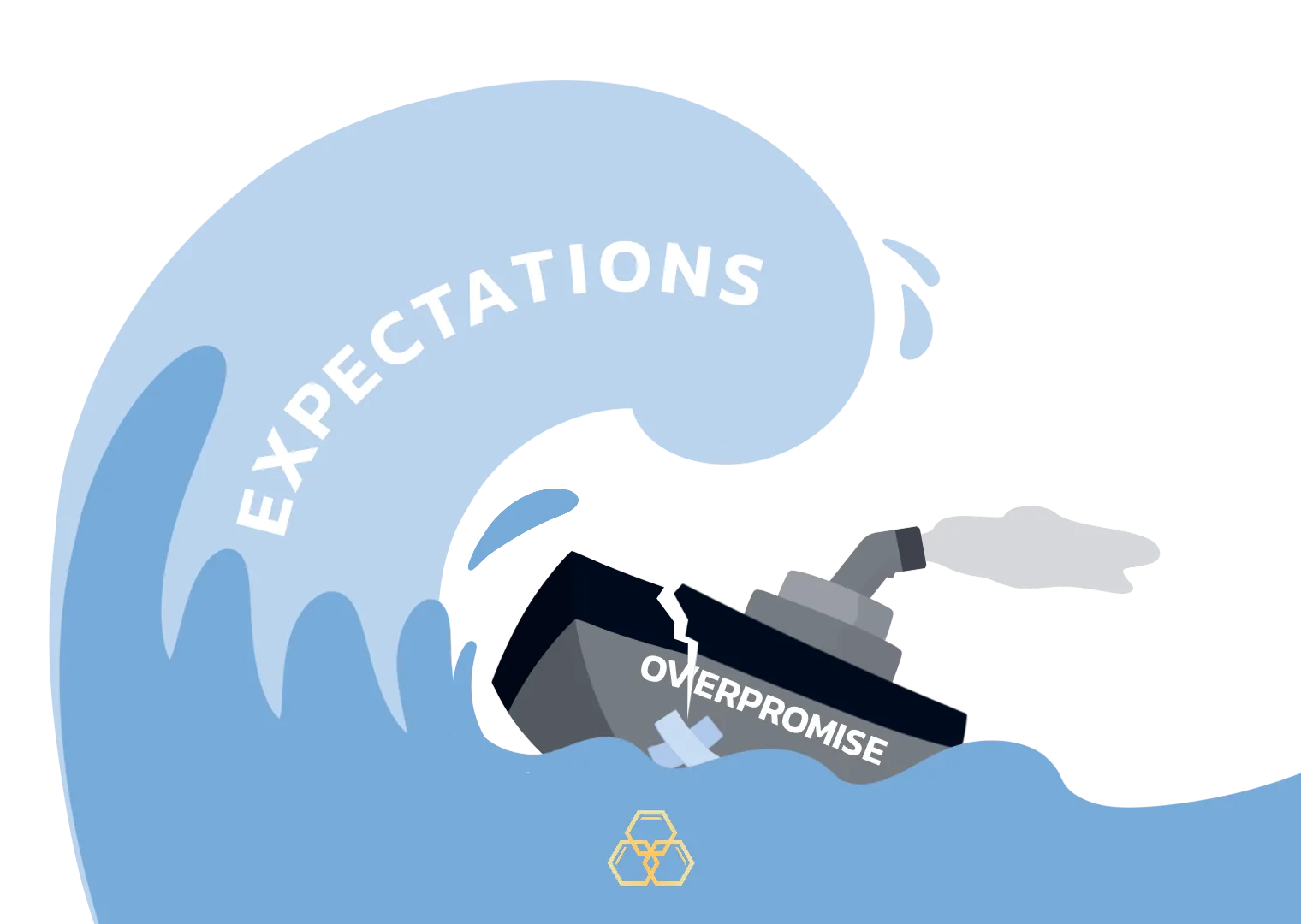
7. They Overpromise Without a Clear Process
Be wary of marketing hires who make bold claims about transforming your brand without asking enough questions first. Evaluating a candidate's previous experience and leadership experience is essential to ensure they have the skills and background to deliver on their promises.
A strong brand manager knows that understanding the business deeply, its goals, its audience, and its competitive landscape comes before any strategy is formed. If they’re already pitching sweeping changes before they’ve done the discovery work, it’s a sign they may be more focused on impressing you than on actually serving your brand.
What to Look for in a B2B Brand Manager
Now that you know what to avoid, it’s equally important to understand what the right person, or team, should be like:

A Deep Understanding of Your Industry
The best B2B brand managers understand branding, and they understand your world. They’re familiar with your industry’s language, challenges, and competitive dynamics, which means they can position your brand with precision rather than guesswork.
Top managers gather consumer insights through methods such as focus groups, online surveys, and interviews to better understand industry challenges and customer needs, ensuring your branding strategy is informed by real data.

Proven Strategic Thinking
Look for someone who leads with strategy before execution. They should be able to assess your current brand positioning, identify gaps, and identify opportunities for growth or differentiation based on data and market trends.
Additionally, they should develop a clear, goal-oriented roadmap that connects your brand to your business objectives.

A Strong Grasp of the B2B Buyer Journey
Your brand manager should understand how B2B buyers think and move through the decision-making process. This means crafting messaging and content that builds trust and nurtures relationships at every stage, from first impression to signed contract.
A great brand manager should focus on customer experience and customer engagement throughout the buyer journey, leveraging customer insights to create strategies that improve retention, loyalty, and overall satisfaction.
A successful brand manager should have a consumer-centric focus, actively listening to customer needs and preferences to develop strategies that foster loyalty and retention.

Consistency in Execution
A great brand manager commits to building a brand and maintaining it. They create systems, guidelines, and processes that ensure consistency across all brand touchpoints, investing the proper time to maintain brand integrity. This dedication ensures every touchpoint, across every team and channel, reflects the same identity and voice.

Cross-Functional Collaboration
They should be equally comfortable working with your sales team, leadership, creative partners, and specialized professionals such as web developers. Effective brand managers collaborate with web developers and other specialists to ensure cohesive brand execution across digital platforms.
Brand strategy only works when it’s embedded across the entire organization, and that requires someone who communicates and collaborates effectively at every level.

Data-Driven Decision Making
Strong brand managers pair creative instinct with analytical rigor. They track performance, measure brand health, and use insights to continuously refine the strategy, ensuring your brand investment is always working as hard as possible.
Leveraging data informs demand generation, optimize marketing efforts, and develop a comprehensive marketing plan that aligns with business objectives and drives measurable results.

Cultural and Values Alignment
Finally, the right brand manager genuinely believes in what your company stands for. When someone is authentically aligned with your mission and values, they are more likely to build lasting relationships within your team and with customers. This alignment shows in everything they produce, making the working relationship far more effective and sustainable.
Get All of This, and More, with Evolv
Finding a B2B brand manager who checks every one of those boxes is no small task. And once you do find them, the cost of bringing new hires on board can be a significant investment. Cost effectiveness is non-negotiable for small businesses and startups.
That’s where Evolv changes the equation entirely.
Evolv is a branding and marketing agency based in Ann Arbor, MI, built specifically to deliver the kind of strategic, high-quality brand management that B2B companies need, without the barriers that typically come with it.
For just $995 per month, with no contract required, Evolv gives you access to a dedicated team of branding experts who bring all of the qualities listed above to the table from day one.
No lengthy hiring process. No long-term contract commitments. No six-figure salary. Just consistent, strategic, expert-level brand management at a fraction of the traditional cost, with the flexibility and ability to scale as your business grows.
When you compare the numbers, the value becomes clear:
- In-house Brand Manager: $70,000–$100,000+/year in salary, plus benefits and overhead
- Freelancer: Variable costs, inconsistent availability, and limited strategic scope
- Traditional Agency: High retainers, rigid contracts, and often a one-size-fits-all approach
- Evolv: $995/month, no contract, full strategic brand management tailored to your B2B business

Ready to Build a Brand That Works as Hard as You Do?
Your brand is one of your most valuable business assets, and it deserves to be managed with intention, expertise, and consistency. Not only does it create loyalty and success, but it also leads to positive word of mouth, driving organic growth and brand recognition. Whether you’re starting from scratch or looking to sharpen an existing brand, having the right partner in your corner makes all the difference.
If you’re ready to stop leaving your brand to chance and start building something that truly sets you apart, Evolv is here to help.
Get in touch with Evolv today, and let’s talk about what strategic brand management can do for your business — on your terms, at a price that makes sense.
FAQs
How much does it cost to hire a brand manager?
A full-time brand manager typically costs $70,000–$100,000+ annually. Freelancers vary in pricing, and agencies often require contracts with high retainers. Evolv offers a more accessible alternative at $995/month with no contract.
What is the role of a B2B brand manager?
They are responsible for defining, protecting, and nurturing your organization's brand identity across all touchpoints. They shape and protect how your business is perceived by other businesses, ensuring consistent messaging, credible positioning, and a brand strategy that directly supports your sales and growth goals. Managing brand equity—a key asset that motivates target audiences, drives ROI, and contributes to overall business success—is a core part of their role. Additionally, proficiency in CRM and marketing automation platforms is essential for tracking customer journeys and managing leads effectively.
What are the 4 types of B2B marketing?
The four main types are content marketing, digital marketing, event marketing, and account-based marketing (ABM), each playing a distinct role in building awareness, trust, and relationships with business buyers.

Carl Undag

Evolv helps companies scale their brand without the headache of hiring full-time employees or unreliable freelancers. Our flat-rate monthly subscription gives you on-demand access to a dedicated creative team, letting you submit branding tasks with zero compromise on speed or talent.