Here's what's changed: B2B buyers have quietly moved a big chunk of their research off search engines entirely. Recent data show that over 70% of B2B decision-makers now use AI tools such as ChatGPT, Gemini, or Perplexity at some point in their vendor research process.
And a growing number of them start there before they ever open a browser tab.
They ask, "What's the best project management platform for a 50-person SaaS company?" and act on whatever comes back.
That's the visibility gap most brands have.
Ranking on Google still matters; don't let anyone tell you otherwise. But if AI systems can't surface your brand, find your expertise, or pull your content into a generated answer, you're already invisible to half your potential buyers. And in B2B, where one deal can be worth six figures, "half invisible" is a problem you can't afford to sit on.
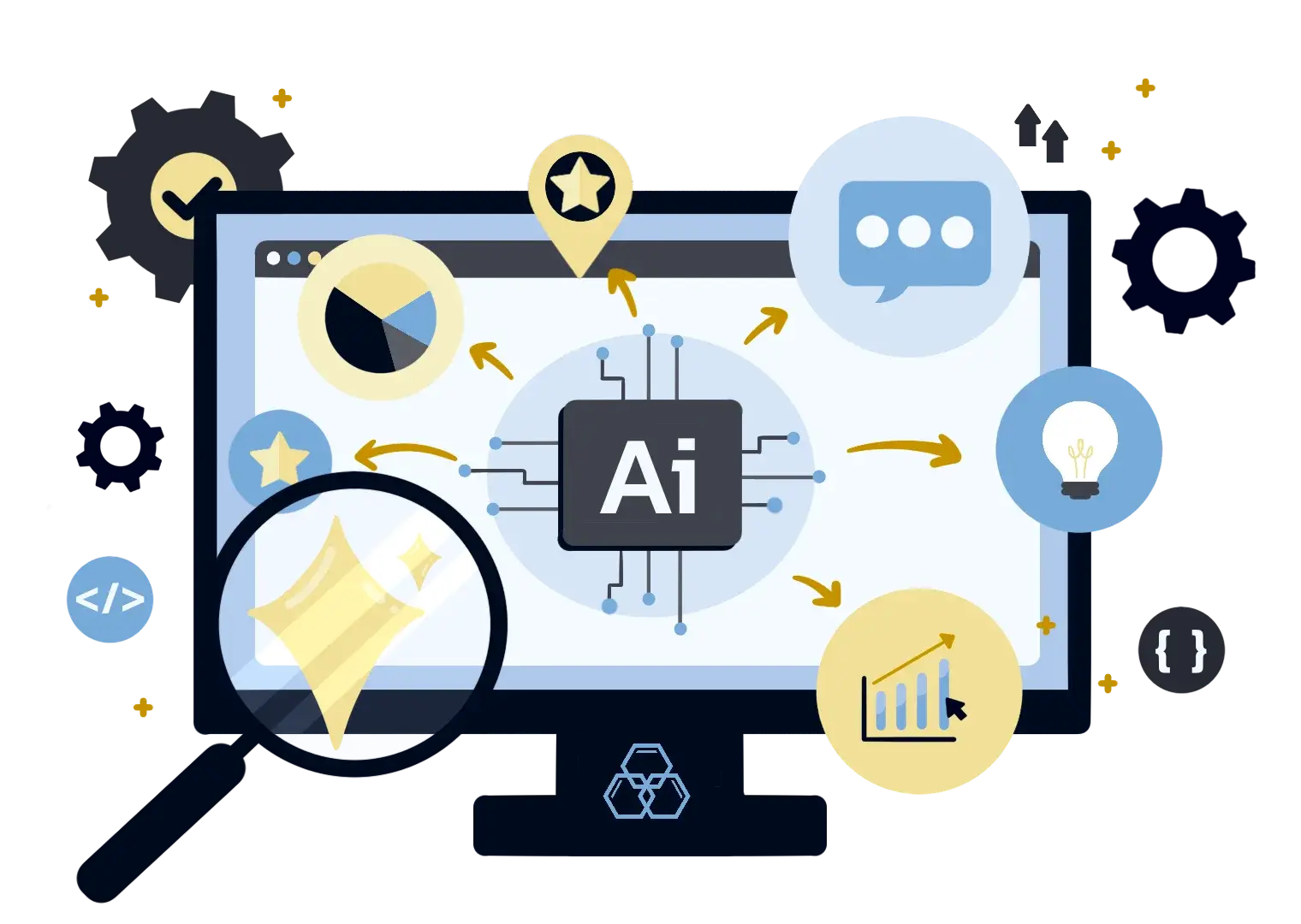
What is Generative Engine Optimization?
At its core, GEO is structuring and positioning your content so that AI platforms like ChatGPT, Perplexity, Google’s AI Overview, and other AI powered search engines, can find, understand, and cite your brand in the answers they generate.
Where traditional SEO is about earning a spot on a results page, GEO is about earning a mention inside the answer itself.
When a B2B buyer types a question into an AI tool, the system doesn’t just return ten blue links and let the user decide. It synthesizes information from across the web, forms an opinion, and delivers a response. Often, without the user ever clicking through to a single source.
That zero-click reality is changing search behavior, especially as ai driven search trains users to ask longer, more conversational questions.
Your job, with GEO, is to be one of the sources that shaped that response.
The important thing to understand is that GEO doesn’t replace SEO. The two run in parallel; they are part of a broader digital marketing approach. But for B2B brands especially, ignoring GEO right now is like ignoring Google in 2003 and betting everything on the Yellow Pages.
The strategies being tested today by forward-thinking SEOs and content teams are still being refined in real time. Academic research on GEO only began to gain serious traction in 2024. And most agencies are still retrofitting old SEO frameworks and calling it GEO.

GEO vs SEO in 2026: Do You Still Need Both?
Every few months, a new post circulates in marketing communities declaring that SEO is dead. It happened when social media took off. It happened when voice search was supposed to change everything.
And now, with AI-generated answers eating into organic click-through rates, the "SEO is dead" crowd is louder than ever.
They're wrong, but they're not entirely wrong either. And that nuance is worth sitting with for a moment.
GEO and SEO Are Not in Competition
The framing of GEO versus SEO is a false one, and it’s leading a lot of B2B marketing teams to make a strategic mistake, either dismissing GEO because they’re too invested in their existing SEO infrastructure, or overcorrecting toward GEO and letting foundational SEO work deteriorate.
GEO and SEO are simply two expressions of the same underlying goal: making your brand findable, credible, and accessible to the people who need what you offer. GEO complements traditional SEO rather than replacing it, helping you pursue both search engine rankings and visibility inside generated answers. They just operate on different surfaces.
SEO puts you on the results page in traditional search, while GEO puts you inside the answer on ai driven search engines. A buyer who finds you through an AI-generated response will often still visit your website, read your content, and move through a conversion journey that your SEO infrastructure supports.
How SEO Itself Has Evolved Because of GEO
That said, it would be dishonest to pretend that SEO looks exactly the same in 2026 as it did in 2022. In the AI era, AI-generated answers have forced a meaningful evolution in how SEO is practiced; a recalibration of priorities.
A few shifts worth naming:
- Keyword intent has changed. Previously, ranking for popular keywords was the main goal of SEO. Now, it’s crucial to ensure your content meets the search intent. AI systems check for this more closely than traditional crawlers. Low-quality content relying only on keyword density is losing ranking fast.
- Click-through rate expectations have changed as Google’s AI Overviews now provide direct answers on the results page, decreasing clicks to organic results, especially for informational queries. SEO strategies focused on traffic volume should be adjusted to emphasize visibility, brand recall, and assisted conversion alongside raw click numbers. By 2028, large language models are expected to drive more website visits than traditional organic search.
- E-E-A-T is now the core of content strategy, emphasizing Experience, Expertise, Authoritativeness, and Trustworthiness. Google’s framework has become key in assessing content credibility for both traditional search and AI.
- Technical SEO is now crucial. Best practices like structured data, site speed, crawlability, and clean site architecture are prerequisites in the GEO era. AI systems must efficiently access and interpret your content, making any technical barriers a GEO as well as an SEO issue.

Why B2Bs Face Unique GEO Challenges in 2026?
Here's what B2B brands are genuinely up against right now:
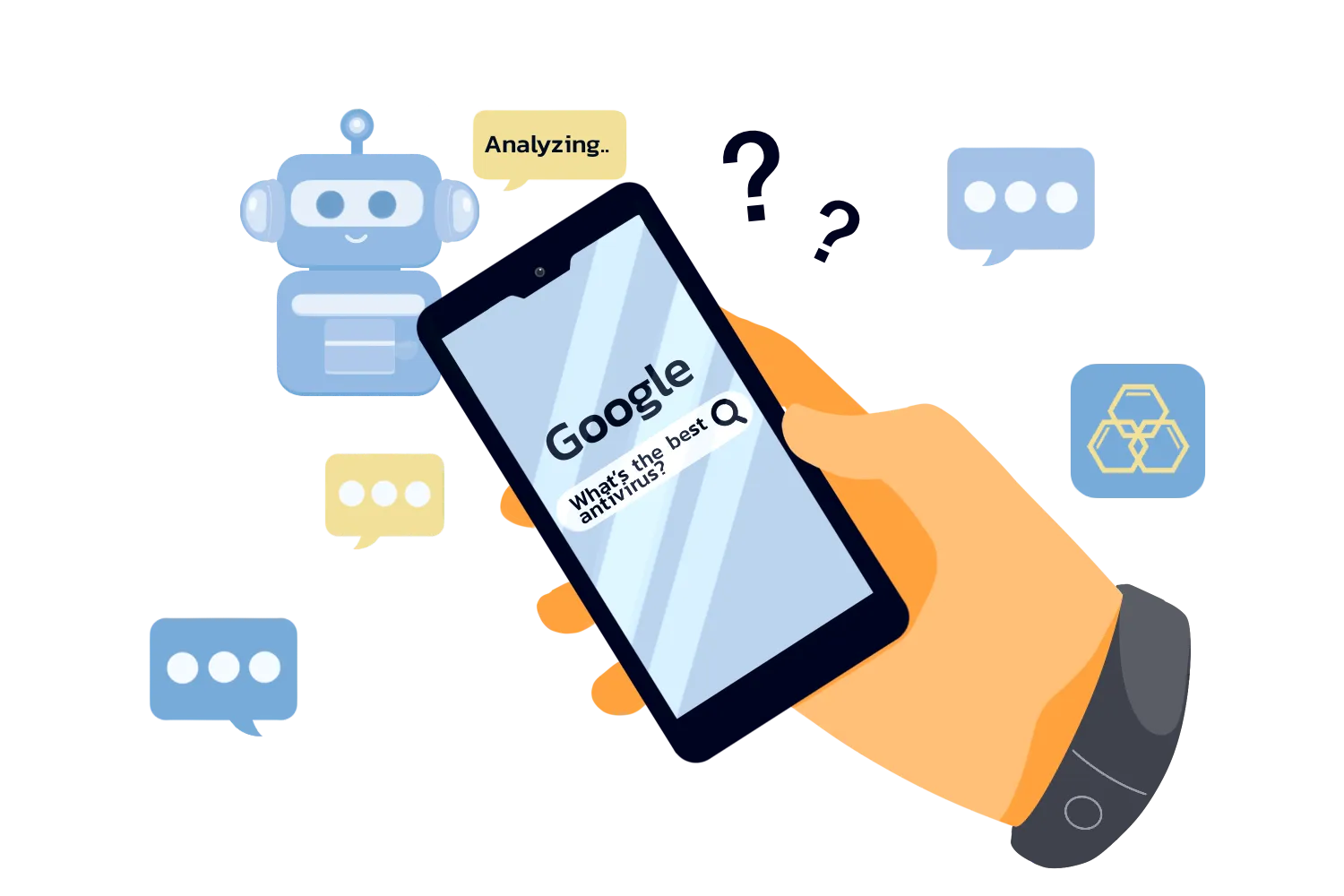
1. Your buyers ask complicated questions AI still struggles with
B2B purchase decisions rarely start with a simple query. A procurement manager evaluating an enterprise cybersecurity platform isn’t asking “what’s the best antivirus?” They’re asking nuanced, multi-layered questions about compliance requirements, integration capabilities, vendor support models, and total cost of ownership.
B2B buying cycles require extensive research and vendor evaluation, so AI search often becomes a primary research assistant.
AI tools are getting better at handling complexity, but they still tend to flatten it. If your content isn’t structured to answer these layered questions clearly and completely, it gets left out as user interactions with AI systems continue to evolve.

2. Long sales cycles mean multiple AI touchpoints, and multiple chances to lose
The average B2B sales cycle runs anywhere from three to twelve months. During that window, your buyer is repeatedly returning to AI tools: at the awareness, evaluation, and shortlisting stages, and sometimes even right before signing.
Every one of those interactions is an opportunity for a competitor to show up in the generated answer instead of you. SEO gave you one shot to rank. GEO requires you to be present and credible across an entire decision journey.

3. Niche industries don't have enough content for AI to train on
AI models learn from what exists on the web. If you operate in a specialized vertical, such as industrial equipment, logistics software, regulatory compliance, or B2B fintech, creating highly targeted, industry-specific relevant content can improve GEO visibility in those markets, where there may simply not be enough high-quality content in your space for AI systems to build confident answers from.
That means AI tools often default to vague, generic responses, and the lack of authoritative content also weakens brand visibility in AI outputs, or worse, surfaces the one competitor who has been publishing consistently. In niche B2B markets, the content gap is both the problem and the opportunity.
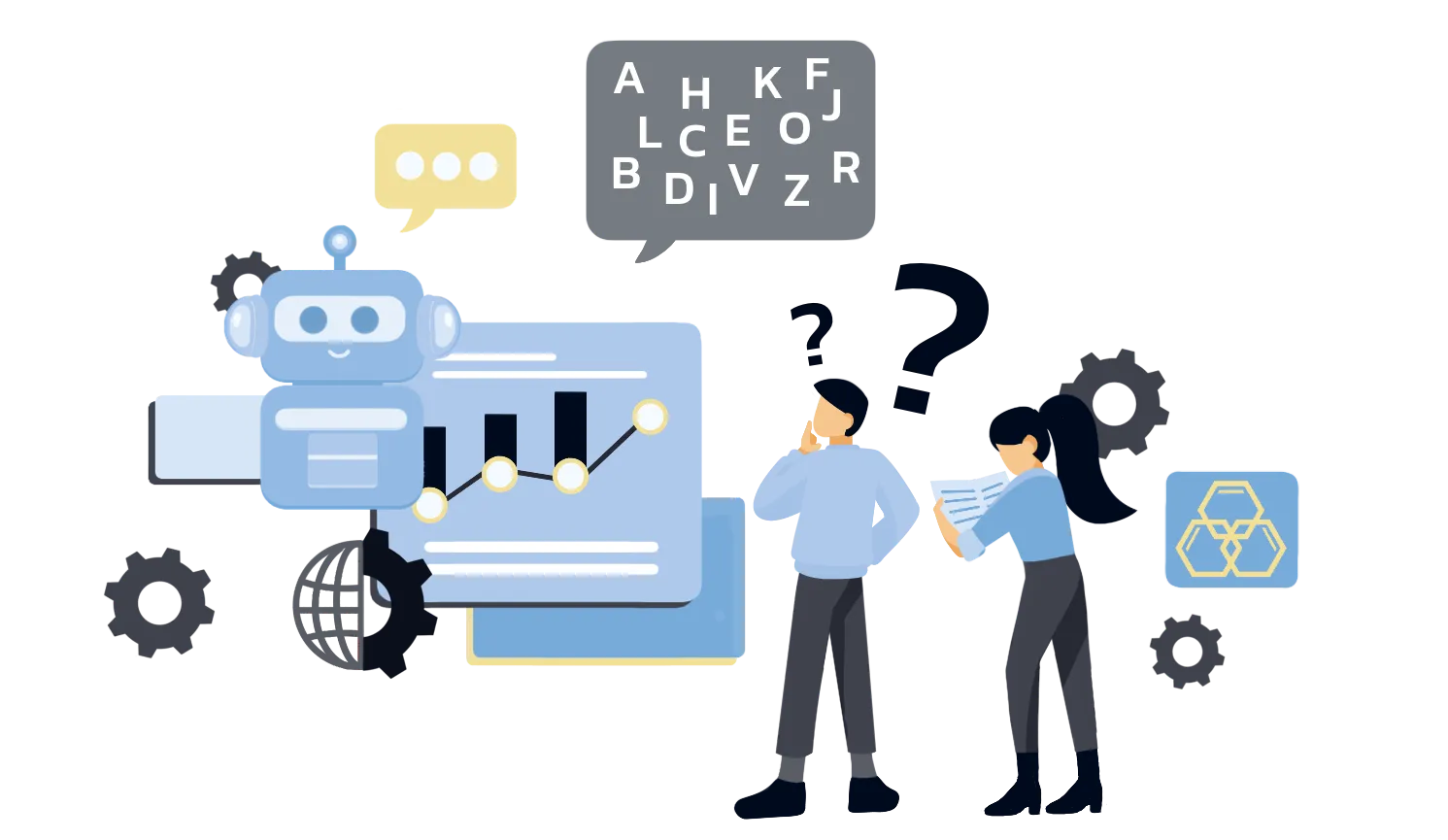
4. Technical and jargon-heavy content confuses AI summarization
B2B content is dense by nature. Whitepapers, case studies, and product documentation are full of industry-specific language, acronyms, and assumed context. AI systems don’t always interpret this content the way a human expert would. AI crawlers struggle to pull data from dense, narrative-heavy blocks of text and tend to favor clean, standalone data points within strong content structure.
If your best thought leadership is buried in a 40-page PDF filled with internal terminology and passive voice, the AI is likely going to skip over it in favor of something cleaner and more accessible, even if yours is the more authoritative source, because Retrieval-Augmented Generation (RAG) systems first look for concrete data they can extract before generating AI summaries.
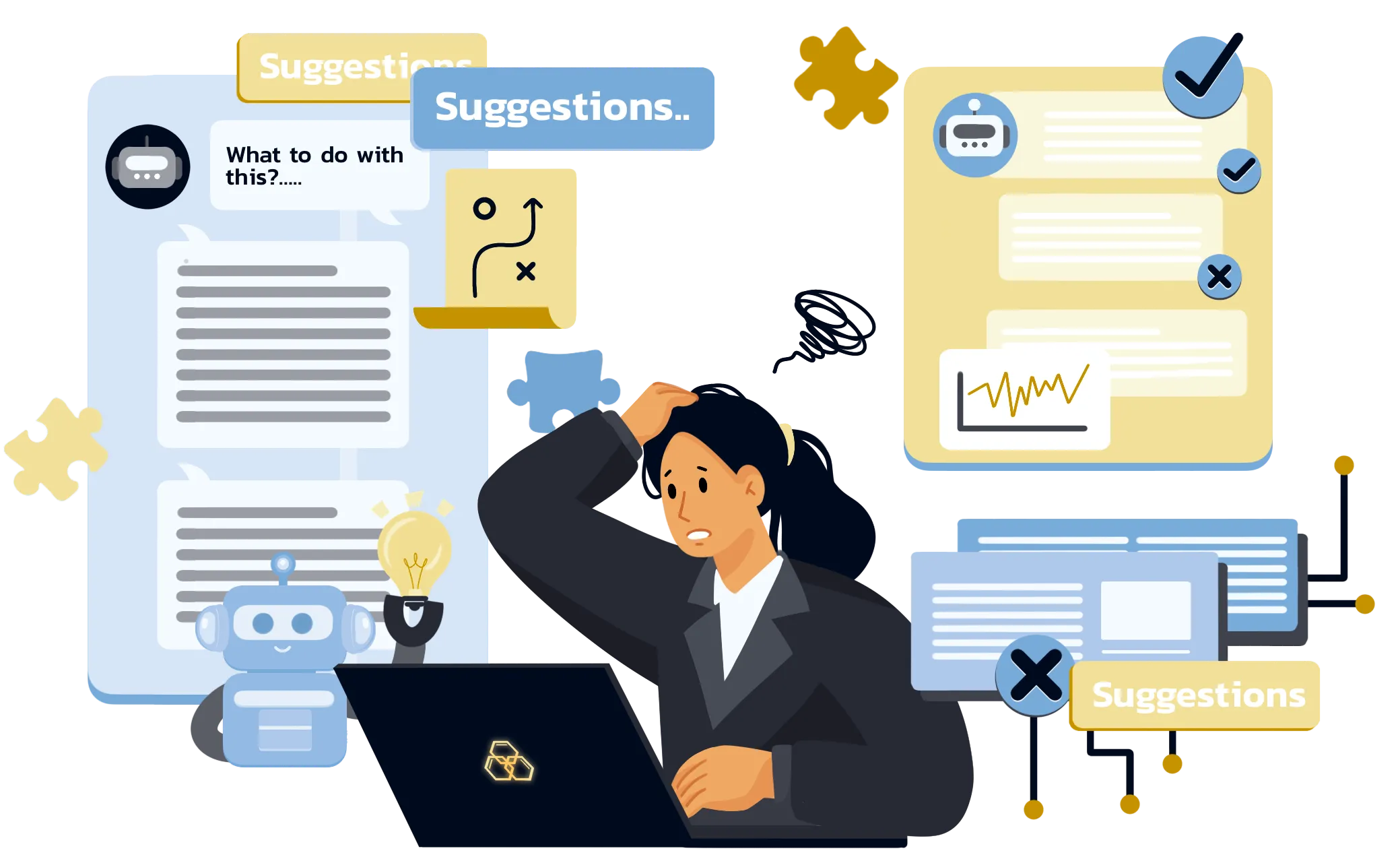
5. Multiple decision-makers mean multiple AI conversations you can't control
In B2B, you're rarely selling to one person. A typical deal involves a technical evaluator, a financial approver, an end-user champion, and an executive sponsor, each with different questions, different priorities, and different AI prompts.
Each of those people may be having completely separate AI-assisted research conversations about your brand, your competitors, and your category. Maintaining a consistent, authoritative presence across all of those generated answers is a challenge that B2C brands simply don't face at the same scale.

6. Your credibility signals don't always translate to AI visibility
In traditional SEO, credibility was built through backlinks, domain authority, and review platforms. Those signals still matter, but AI systems weigh authority differently, using Named Entity Recognition and relation extraction to connect brand names with known industry concepts.
They look for consistent brand mentions across trusted publications, high-quality backlinks from authoritative sources, clear expertise signals in your content, structured data that contextualizes who you are, and the overall clarity with which your content answers real questions.
A lot of B2B brands with genuinely strong reputations are invisible to AI right now, simply because their credibility exists in places AI can’t easily read or interpret. And so the brand appears less often in AI outputs when those entity signals are weak.

7. The pressure to act exists without a clear standard to follow
Perhaps the most frustrating challenge of all: every B2B marketing leader knows GEO matters, but there’s no established benchmark to measure against. It has no universally accepted framework to follow, and no agency that’s been doing this long enough to show you a five-year track record. This makes implementing GEO an iterative process rather than a one-time playbook.
You’re being asked to invest in a discipline that is still defining itself, while also justifying that investment to a CFO who wants ROI figures.
That tension is real. But the brands that figure this out early, even imperfectly, are the ones that will own AI-generated visibility in their categories before their competitors realize the game has changed, because refining geo efforts over time matters more than waiting for perfect standards.
GEO in Practice: Content Types That Get Cited
Understanding the GEO conceptually is one thing. Knowing what to actually create is where most B2B teams get stuck. The good news is that AI engines have clear patterns.

1. Direct Answer Content ("Best Answer" Pages)
AI engines are fundamentally answer machines. They’re looking for content that directly, clearly, and confidently responds to a specific question, without making the reader wade through three paragraphs of preamble first.
Pages that open with a clean definition or a concise answer to a stated question get cited more frequently because they give the AI exactly what it needs to synthesize a response.
AI models reward clarity, and AI engines prioritize genuinely helpful, expert-level content over thin pages that get ignored completely. If your content answers the question in the first 100 words and then supports it with depth, you’ve built something an AI can both extract from and trust.
What to create: FAQ pages, definitional blog posts, and “What is X?” or “How does X work?” content built around the questions your buyers are actually asking AI tools, while optimizing content for direct answer formats.

2. Original Research and Proprietary Data
When AI engines generate answers, they actively look for data points, statistics, and findings they can cite as evidence. Original research, your own surveys, benchmarks, industry reports, or platform data, give AI something it can't get anywhere else. That scarcity is exactly what makes it valuable.
AI systems are trained to attribute claims to sources. If your brand publishes a statistic that no one else has, that number will get cited with your name attached to it every time an AI uses it. It's essentially a permanent citation loop.
What to create: Annual industry surveys, benchmark reports, original data studies, and proprietary insights drawn from your own platform or customer base.

3. Structured "Listicle" and Comparison Content
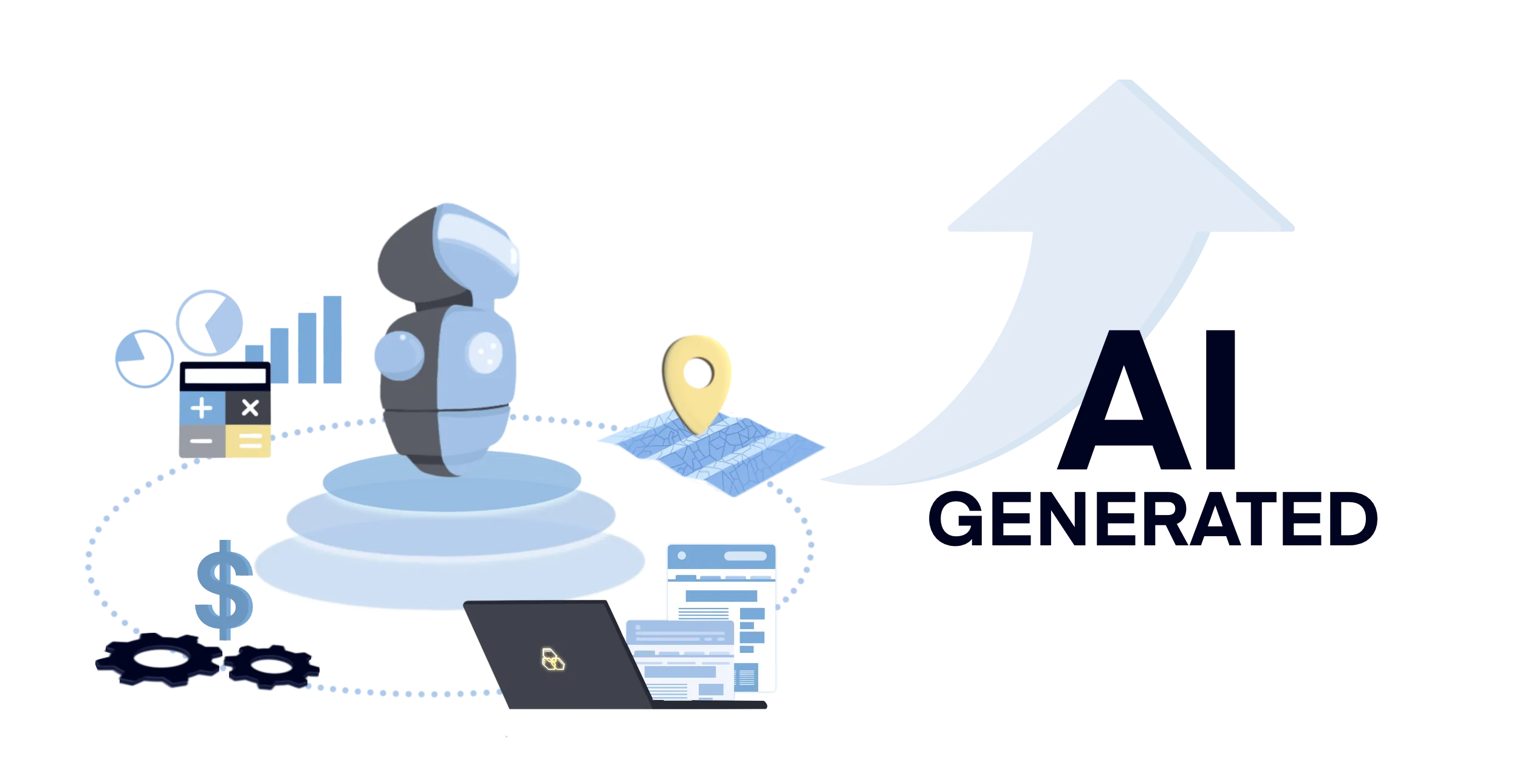
AI engines are exceptionally good at pulling structured information into generated responses, especially when those formats help reuse cleaner existing content instead of forcing entirely new assets. Numbered lists, comparison tables, step-by-step breakdowns, and clearly labeled sections are far easier for AI to parse and extract than dense, unbroken prose.
This is one area where the overlap between good UX and good GEO is almost perfect, and the same structure also helps service pages and key pages perform better.
When an AI is building a response to “what should I look for in a B2B CRM,” it’s looking for content that already organizes the answer in a digestible, scannable format, and yours will beat a competitor’s wall of text every time. Well-labeled sections also make ai generated content extraction more reliable.
What to create: “X things to look for in [product category]” posts, vendor comparison guides, step-by-step process breakdowns, and decision frameworks laid out in clean, labeled sections.
4. Expert-Led Thought Leadership
AI tools are increasingly good at distinguishing between generic content and content that carries genuine expertise.
First-person insight, specific experience, nuanced takes, and opinions backed by real-world context are being surfaced more frequently, especially as AI developers work to filter out thin, AI-generated filler content that flooded the web in 2024 and 2025. In that environment, credible expert-led work can outperform generic generative AI output and copy produced with generic generative ai tools.
Authenticity and specificity are credibility signals that also support stronger brand perception. An article written by a named expert, with a clear point of view, concrete examples, and a distinct voice, reads differently to an AI model than a recycled summary of commonly known information.
What to create: Bylined expert articles, opinion pieces grounded in real experience, case-based analysis, and “lessons learned” content that only someone with direct experience could write.

5. Case Studies with Specific Outcomes
Vague case studies don't get cited. The ones that do share something specific, a measurable result, a named challenge, a clear before-and-after. AI engines treat specificity as a trust signal, and in B2B, especially, outcome-driven case studies give AI tools something concrete and attributable to include in a generated response.
Numbers and named outcomes are anchor points for AI-generated answers. "Company X reduced churn by 34% in 90 days using the Y approach" is exactly the kind of claim an AI wants to include when answering a question about the effectiveness of a solution.
What to create: Outcome-focused case studies with quantified results, client-specific context, and a clear narrative arc from problem to solution to measurable impact.
6. Glossaries and Definitional Content
This is one of the most underrated content types in B2B GEO. When someone asks an AI to define an industry term, explain a concept, or clarify a piece of jargon, the AI looks for sources that have already done that work cleanly. A well-built glossary or terminology page positions your brand as the authoritative voice on your industry's language.
Definitions are high-confidence, low-ambiguity content. AI models cite them readily because they're unlikely to be contested and directly answer clear user intent.
What to create: Industry glossaries, terminology guides, "plain English" explainer pages for complex concepts, and jargon-busting content tailored to buyers who are new to your category.

7. "State of the Industry" and Trend Reports
When B2B buyers ask AI tools about the current landscape of their industry, what's changing, what's emerging, and what to watch, the AI looks for credible, recent, and comprehensive sources to draw from. Annual or semi-annual trend reports that take a clear position on where an industry is heading consistently earn citations because they're among the few content types that are both authoritative and time-sensitive.
AI engines favor content that speaks to current conditions, not just timeless principles. A well-framed trend report signals that your brand has its finger on the pulse, which is exactly the kind of source an AI wants to cite when answering forward-looking questions.
What to create: Annual "State of [Your Industry]" reports, mid-year trend roundups, and forward-looking analysis pieces that take a clear editorial stance on where things are heading.
Final Thoughts
B2B buying has shifted. And it's very loud. Your prospects are having AI-assisted research conversations about your category, your competitors, and potentially your brand, right now, today, and the output of those conversations is shaping shortlists, influencing budget conversations, and moving deals forward or sideways before your sales team ever enters the picture.
Let's talk about your brand's GEO strategy. Book a free demo call with our team and walk away with a clear picture of where you stand and what to do next.
FAQs
What is Generative Engine Optimization (GEO)?
Generative Engine Optimization is the practice of structuring and positioning your brand’s content so that AI tools like ChatGPT, Google AI Overviews, and Google’s AI can easily find and cite it. Unlike traditional SEO, which aims for visibility on search results pages, GEO focuses on ensuring your brand is mentioned in AI-generated answers.
How is GEO different from traditional SEO?
SEO focuses on optimizing for traditional search engines and their ranking factors through backlinks, keyword relevance, and site health to rank on search result pages. GEO optimizes for AI language models, emphasizing content clarity, structured data, expertise, brand consistency, and third-party authority to influence AI-generated answers.
How do AI engines choose which content to cite?
In practice, GEO success is judged by share of voice in AI-generated answers, sentiment, and whether a brand is included as a recommended solution, not just traffic. However, they prefer content that is clear, direct, well-structured, backed by expertise, consistent with online descriptions, and supported by credible third-party mentions.
Original data, named frameworks, proper schema markup, and strong E-E-A-T signals increase the likelihood of citations. Here, metrics matter: track ai responses visibility, share of voice, brand sentiment, content crawling by AI bots, web engagement, leads and pipeline impact, and geo performance through region-level visibility signals.
What kind of B2B content works best for GEO?
Effective B2B GEO formats include original research, direct-answer and FAQ content, structured comparisons, expert thought leadership, measurable outcome case studies, industry-specific content for B2B companies, industry glossaries, and trend reports, with relevant content performing best when adapted for ai generated responses.

Carl Undag

Evolv helps companies scale their brand without the headache of hiring full-time employees or unreliable freelancers. Our flat-rate monthly subscription gives you on-demand access to a dedicated creative team, letting you submit branding tasks with zero compromise on speed or talent.